

Public schools and libraries saved my life as a kid.
We have a crisis on our hands — I’ll tell you what’s making it worse, and our plan to turn things around. 🧵
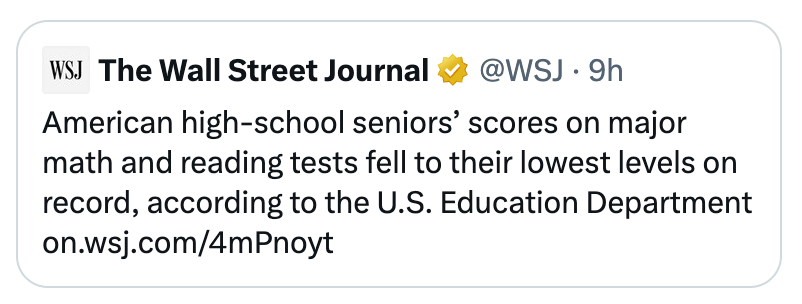
I grew up in Youngstown; dealing with a lot of abuse and neglect, and was even homeless at one point. Public school was something I could count on and a place I felt safe.
But now in Ohio, a private school voucher program is sending billions (yes, billions) of your tax dollars to fund private schools with no accountability as to how the funds are actually spent.

Our students, teachers, and districts are suffering while money that could go to public schools–which are already underfunded–is diverted elsewhere, with zero transparency.
Our schools are left with larger class sizes and fewer opportunities for Ohio’s students—including kids facing poverty, like I did. In fact, your tax dollars are required to be spent bussing for private schools, while underfunded public school students have to find some other ride.
This is also a major reason property taxes are up across Ohio—to pay for unaccountable vouchers and make up the difference from state underfunding. My opponent won’t mention that.
An Ohio Court also recently ruled that the private voucher system violates Ohio’s Constitution, just as the chronic underfunding was also ruled unconstitutional.
The state budget this year made it even worse. Statehouse politicians abandoned the bipartisan Fair School Funding Program. Oh and they handed over $600 million dollars to a family of billionaires to build a football stadium.
As governor, my plan is to return Ohio education to being among the best in the nation by doing three things.
First, I will fully and constitutionally fund our public schools. This will allow us to prioritize students, educators, and schools over a sports arena and tax cuts for the wealthy, and it will help reduce the pressure on local property taxes.
Second, we will tackle the out-of-control private school voucher system, and push for desperately needed transparency of where those billions are going and how they are being spent.
Vivek Ramaswamy talks about raising public school standards, but he is gladly accepting $10M from a donor who famously backs these unaccountable vouchers.
Third, we will use those savings to invest in best practices and proven strategies that will once again make Ohio among the best states in the nation when it comes to education. We will invest in new approaches to math and literacy programs to make sure they’re tied to the real world demands students face when they graduate.
We’re also talking expanding literacy efforts beyond the early grades, prioritizing math and science/tech skills, and reforms to make our high schools great again. And before graduating, and continuing after, we will ensure our students have the skills they need for great jobs and great lives. That’s good for them, and essential for Ohio’s economy.
My opponent referred to school underfunding as a “silly accounting dispute” and also wants to eliminate the teachers’ unions. My husband is a 43-year public school teacher and we are a union household so, yeah, we take this personally.
My opponent also keeps re-introducing warmed-over gimmicks, quick-fixes and political talking points dressed up as “policies” that have already failed Ohio once before, if not multiple times. The last thing we need is to keep doubling down on all the things that have deeply undermined an education system that was once ranked one of the nation’s best.
It’s about priorities. A governor who believes in public schools can fight for fair funding, safe and productive classrooms, high quality schools, higher teacher pay, and the belief that every child deserves a great public education—no exceptions.
Dr. Acton, you have well thought out, viable solutions! We need to ensure Ohioans know your plan!
Dr Acton, I applaud your approach to issues: defining what the problem is and the root causes, and then developing a comprehensive and practical set of actions to address the causes and deliver the end result we need. If I may, a suggestion to add to these policy proposals: (1) when you propose spending, try to estimate a range of what those costs are and how they will be funded; and (2) try to estimate the metric or metrics you would use to determine if the actions are succeeding, and commit to publicly reviewing performance versus those metrics each year, so policies that aren’t working can be revised or stopped.
I believe most citizens want elected leaders to be stewards of tax payer funds they ask for. They want to know a purpose or benefit to be delivered we can see, and the specifics of who is getting the benefit, how much it costs, and whether programs are working as intended via a public report annually.